
In Southwest Florida, we understand that our economy is the environment. The region’s allure and prosperity are deeply rooted in our coastal and inland waters. When water quality is harmed, it is not just an environmental matter, it is an issue that is foundational to every aspect of life in Southwest Florida – tourism, jobs, recreation, quality of life, property values, human health and the list goes on.
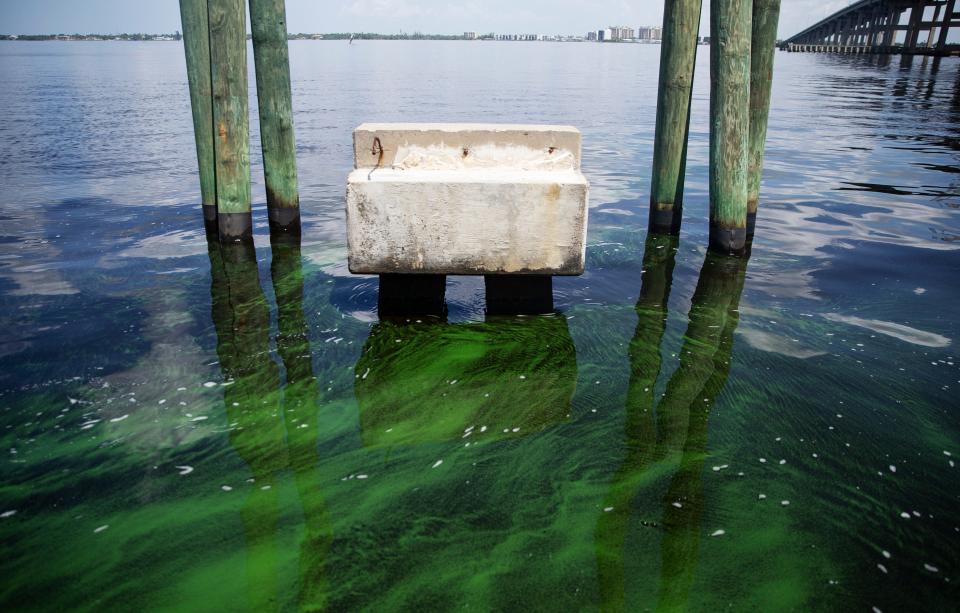

Simply put, our region’s economic and ecological well-being hinges on the health of our waters.
Yet, while there’s almost universal agreement that our water fuels our economy, our water quality continues to decline. Harmful Algal Blooms (HAB), like blue-green algae and red tides, continue to decimate our waters. Severe events, such as the 2018 bloom, disrupted local industries, marred the natural beauty of our beaches and rivers, and raised alarming concerns about the ecological future of the region.
Our area suffers from smaller yet still impactful negative HAB events annually. These bloom events may not make national news each time they occur, but each occurrence harms our environment, damages our economy and weakens our ecosystem’s ability to bounce back. These events serve as a stark reminder of the fragile balance between nature and human activities. As we look at current conditions with Lake Okeechobee at over 16 feet, the possibility of major releases – and with it – massive detrimental polluted water discharges disrupting the Caloosahatchee and our coastal ecology and economy are ever present.
So why are we still dealing with HAB’s and degraded water quality if there is a clear understanding of their negative impacts on our communities, our health and our economy?
Achieving improved water quality is a bit like solving a Rubik’s cube. All sides must line up to solve the puzzle. This includes the needed acceleration of restoration projects such as the Comprehensive Everglades Restoration Plan (CERP), reducing pollution at the source and holding polluting entities accountable. It also requires managing growth in smarter ways, including creating updated statewide stormwater standards, and minimizing the loss of valuable wetlands which play a key role in storing and treating fresh water.
Permitting the unnecessary destruction of wetlands in massive proposed new developments, such as Kingston Development in East Lee County and Belmar in East Collier, are current examples of unsustainable forms of regional developments that weaken our natural infrastructure to support clean water.
To address this growing concern, our organizations together enlisted Greene Economics to conduct a thorough analysis of the economic repercussions of degraded water quality. This pivotal study translates the ecological impact into tangible economic figures, offering a clearer perspective on the stakes involved.
As expected, the study’s findings paint a grim picture of the potential economic fallout of poor water quality. A repeat of the catastrophic events witnessed in 2005/6 and 2018 could lead to a substantial downturn in key economic sectors. An event like the one we saw in 2018 would spell disaster for our commercial and recreational fishing industry, which could lose over $460 million. Furthermore, the region could face a drastic decline in property values, to the tune of $17.8 billion and an accompanying loss of over $60 million in tax revenue.
The report further outlines that over 43,000 people could face job losses. Of course, not everything related to water quality can be quantified – consider the emotional toll of just one person losing their job due to the impacts of HAB’s. Or the disappointment in needing to avoid the beach or a planned kayak trip in a local river due to dead fish or toxic algae.
Policy makers should factor in the real economic costs of HAB’s when prioritizing budgets and balancing differing interests.
The findings of this report are dire and must serve as a wake-up call – to the public, to elected officials and to community leaders. More must be done – holistically – to address the known root causes of HAB’s and restore our region to a more sustainable form of economic, ecological and community resiliency.
Everyone who loves Southwest Florida should be frustrated, motivated and mobilized – we cannot afford to wait any longer for meaningful action to clean up and protect our precious water resources. We invite the public to view a copy of the Executive Summary or download the full report and visit our organizations’ websites to learn more about how each of us can be part of the solution.
Capt. Daniel Andrews is executive director and co-founder of Captains for Clean Water (captainsforcleanwater.org); James Evans is CEO, Sanibel Captiva Conservation Foundation (sccf.org); Rob Moher is president & CEO, Conservancy of Southwest Florida (conservancy.org)
This article originally appeared on Fort Myers News-Press: Economic well-being hinges on health of our waters

