
President Donald Trump announced recently he’s bringing back the Presidential Fitness Test. You might remember it from school when you were a kid. It involved running a mile, doing sit-ups, pull-ups, a shuttle run.
Launched in public schools in the 1950s, it was championed by President John F. Kennedy in the 1960s following the publication of his famous article, “The Soft American.”
“I welcome this opportunity to speak to the people of America about a subject which I believe to be most important, and that is the subject of physical fitness,” Kennedy said in a 1962 speech. “And I speak not only as president of the union, but also as a parent of two children who I hope will grow up with those qualities of vigor and energy which we identify with the best of America.
“This should be a matter of concern to us all. A country is as strong, really, as its citizens. And I think that mental and physical health, mental and physical vigor, go hand in hand.”
We don’t know yet what this new era of the Presidential Fitness Test will look like, but Breanne Fahs says that in the age of Robert F. Kennedy Jr.’s Make America Healthy Again (MAHA) movement, it’s certain to be interesting.
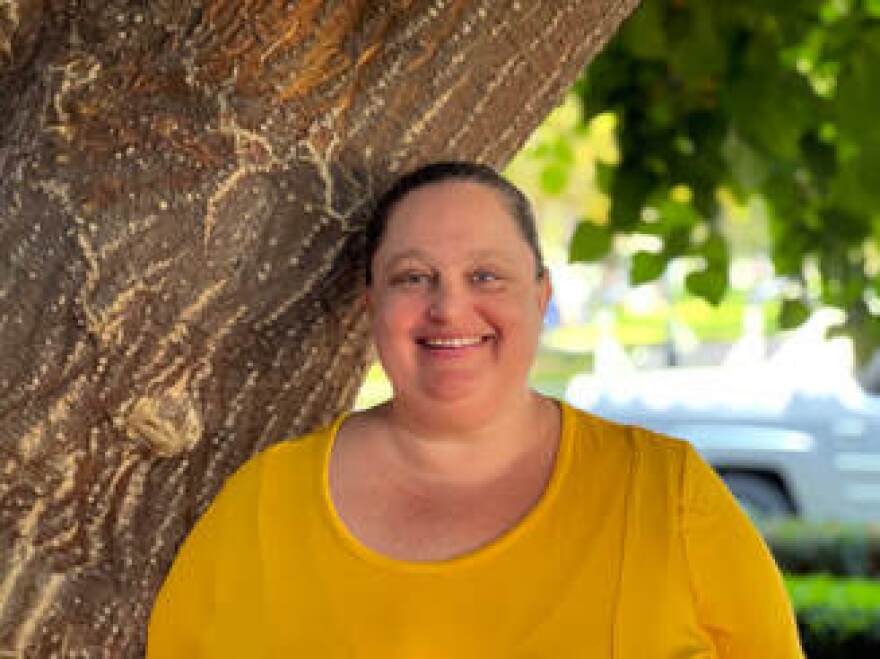
Fahs is an author and professor of women and gender studies and social and cultural analysis at Arizona State University. Her most recent book is called “Fat and Furious: Igniting Radical Fat Resistance.” The Show spoke with her more about this new move by the Trump administration.
Full conversation
BREANNE FAHS: Well, I think what we end up with with the Trump administration constantly is a kind of reversal of logic. So if we recall when Michelle Obama was doing her initiatives many years ago to try to get children to eat more vegetables and to eat slightly more healthy, it was met by many conservatives with absolute ire.
And so I think what’s interesting is under the guise of, “Oh, this is about health,” we end up kind of moving in these strange directions with the Trump administration. And that seems to be happening again with this.
LAUREN GILGER: OK. So let’s talk about the Presidential Fitness Test itself. We’re not quite sure what this new iteration might look like. But you remember taking this in school. I remember that it was like a mile run, sit ups, push ups, shuttle run, stuff like that. Did you take this in school?
FAHS: I did, yeah.
GILGER: What are your memories of it?
FAHS: I mean, I was a pretty intense athlete at the time, and I still remember it was kind of awful, because I don’t think anyone really responds all that well to metrics and litmus tests of exactly what the body is supposed to do. And again, what’s interesting is even people who are in excellent physical shape often struggle with certain tasks on that test.
And so — again, that’s sort of neither here nor there, right? I don’t think this is the hill I’m going to die on, or that anyone else is going to die on is the Presidential Fitness Test. But I think it really is an interesting question to sort of wonder, why now? Why is this the thing that’s coming up again? How does this sort of fit into the MAHA agenda? So the thing itself seems sort of like a non-issue compared to what it sort of symbolizes or represents.

John F. Kennedy Presidential Library and Museum
GILGER: And it’s interesting. So proponents of this will argue that we have a childhood obesity epidemic in the country, that we need to reverse that, that we need to protect kids’ health. We need them to exercise more. All of those things. Do you see that as fitting into that broader narrative you’re talking about with MAHA?
FAHS: Yeah. It’s tricky, right? Like I’m saying, if we look back in time a little bit, you see there’s so much backlash against any efforts that were made to sort of think more holistically about food deserts, to think about broadening access to food stamps, things that people need in order to have access to healthy foods and produce. Thinking about reducing the amount of hours that people work so they have time for leisure, that they sleep better, that they exercise.
Wellness is a big thing, right? And so the MAHA version of this, I think, is quite particular and peculiar, and leaves out a lot of these like broader kind of views — including views of the majority of medical doctors in the country and things like that.
But yeah, if we’re thinking about this question — and I think we should think about this — of what does health mean, and what does it look like? It looks like a lot of things.
And so when we’re thinking about what makes healthy kids, yes of course, exercise is excellent. So is access to going outside. So is having leisure time, having time to play, having cognitively stimulating activities, solid friendships.
I’m also a therapist, which I should mention. So I also think a lot about these broader stories about the kinds of things that seem to be under attack right now or going away, and the kinds of things that are in ascendancy, especially in terms of the kinds of things people are talking about a lot.
And we leave out so many of those things, right? If we’re thinking about what makes a healthy kid, we need a lot of attention to things about, again, what are they eating? How are they exercising? Do they have access to that? How do they learn social skills? Do they have time to play? Are they having kind of a synergy between parent involvement in the schools?
We could go on and on. But so many of these aspects get kind of shrunk down into one tiny pinpoint. Which is, I think, a big problem with this particular topic as well.
Breanne Fahs
GILGER: So your most recent book is about anti-fatness, fat shaming. There is attention, though — as you’re kind of getting out there — that it kind of can be in opposition to the medical establishment saying that being fat does not mean that you’re not healthy. Do you think that bringing back something like the Presidential Fitness Test kind of conflates those things again?
FAHS: That’s a great question. It’s not so much that we want to sort of ask the question of is fatness healthy or not, as much as we want to sort of think about why is fatness cast in certain ways, and why is there so much emotion attached to fatness in such a negative way.
We find things that people — you’re not really even allowed to self-identify as fat because people think it’s a derogatory sort of self-shaming term. Which absolutely is not. So we are so far away from even imagining that someone has the right to just exist or self-label as fat, let alone how we kind of fold that into stories about health.
And stories about health often are laced with very intense stories that have moral content. So that thinness and morality get sort of linked together, and fatness and immorality get linked together. So many fat activists — I would say in some ways myself included — are constantly trying to sort of trouble this binary and sort of think, well, it’s not so much that the argument is fat is healthy. It’s that we want to divorce the idea that fatness is linked with all kinds of negative, emotionally negative evaluative judgments. And certainly we want to do the same with thinness, right?
Otherwise we don’t really make any progress in terms of social justice, and we don’t make space for bodies to sort of do what they do — which is be disobedient, gain and lose weight, get older. There’s so many stories that fit into this that go way beyond the story of fatness.
And the book is really also trying to argue that as well, that we need to think about fatness, even if we don’t think it’s an issue that directly applies to our lives, because it is an issue of bodies and justice, and it attaches to so many other things that will be an issue for us, like — like I said — aging or the body sort of, you know, getting sick, the body changing. All the things that bodies do that are not necessarily things that we choose for them to do.
GILGER: That’s so interesting. So you’re talking about this idea of fat activism and the basic divorcing of that binary that you’re trying to do in that realm. Do you think we’re getting further and further away from that, whereas maybe a couple years ago it felt like we were starting to have that conversation in a real way?
FAHS: I think it’s up and down. I don’t know if there’s much that’s progressing in the Trump administration years right now. We’re kind of back to an era where everyone seems to be on the defensive. So it will be interesting to sort of think in reframed ways about how can we not always — especially as progressives — simply be reacting to the kind of endless barrage of traumas and chaos that’s happening?
So I do feel like that sets everything up to have a very weird tenor right now. But I do think certainly from Gen Z, we’re seeing a lot more interest in thinking about bodies in critical ways. It’s not ideal, but the embrace of body positivity is on the rise.
I think people are recognizing what happens when we just take anti-fatness as a taken for granted assumption and how bad that is. And so what we need is to boost up the language of thinking in more complex ways about bodies and thinking about body size on a regular basis, so that we can sort of have these conversations with more clarity, with more energy.
And I think the more that we do that, the more that these stories start to fall apart. And that’s really helpful and good.
KJZZ’s The Show transcripts are created on deadline. This text is edited for length and clarity, and may not be in its final form. The authoritative record of KJZZ’s programming is the audio record.

