
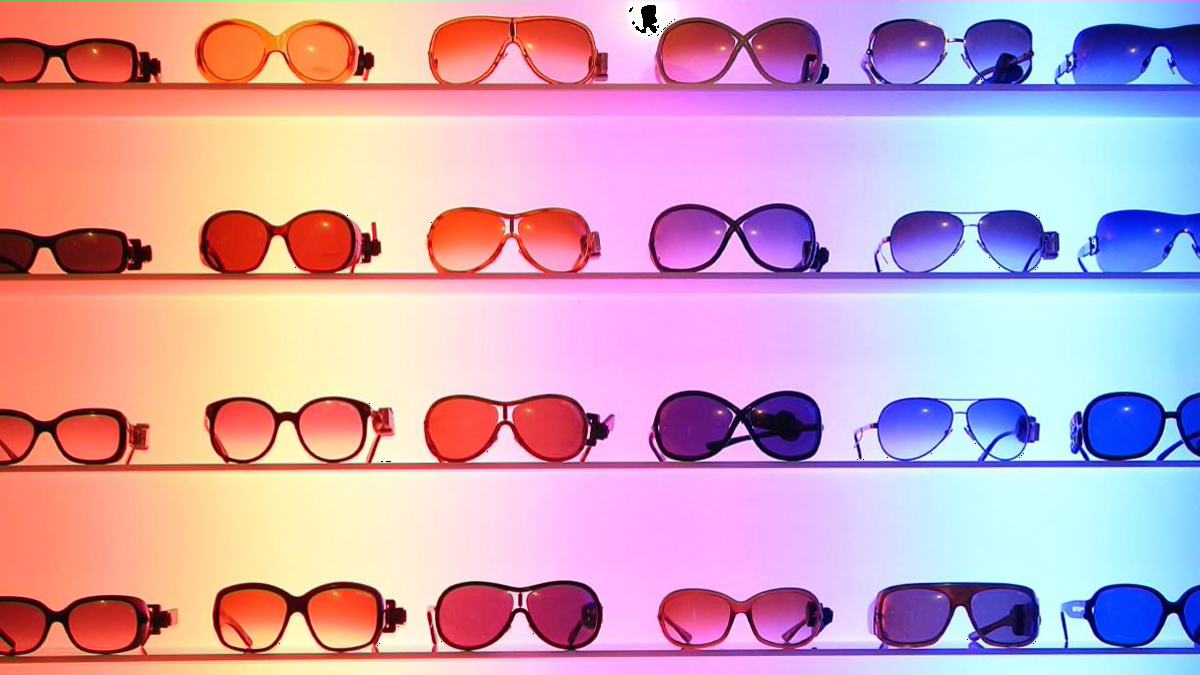
To help limit your exposure to sunlight, wear a hat and sunglasses when you head outside, even on cloudy days, advises Marilyn Schneck, Ph.D., a scientist with the Smith-Kettlewell Eye Research Institute in San Francisco. And keep the following in mind while choosing your shades:
Look for the most protection. Opt for a pair whose label says the product blocks 99 to 100 percent of UVA and UVB rays, two concerning types for eyes. (The term “UV 400 nm” also means the glasses block at least 99 percent of UV rays.) If you wear corrective lenses, make sure they have UV protection built in.
Know that pricier isn’t always better. Confused about pricing? The most effective sunglasses aren’t necessarily more expensive. You can easily find inexpensive sunglasses that have 100 percent ultraviolet-blocking ability.
Go big. Even while wearing sunglasses, some of the sun’s rays can reach your eyes and the skin around them. Larger lenses can help maximize sunglasses’ ability to stop rays from reaching your eyes. Wraparound sunglasses, which conform to the curve of your face, are even better. They have the added bonus of protecting the skin around your eyes, which is difficult to cover with sunscreen.
Take care after cataract surgery. Although a cataract impairs vision, the cloudy yellowing of the lens also blocks some potentially damaging blue light from reaching the retina. Once the cataract is removed surgically, more blue light reaches the back of the eye. Wearing sunglasses and a hat can help protect the retina after you have cataract surgery.

