

A recent study has linked high-fat diets and increased risk of pancreatic cancer.
According to a new study, substances that are said to boost athletic performance can also activate a receptor that speeds up the development of pancreatic cancer in mice.
The progression of precancerous pancreatic lesions into pancreatic cancer is fueled by a cell nuclear receptor that is activated by high-fat diets and synthetic compounds found in unregulated sports performance enhancers, according to research from the University of Michigan Rogel Cancer Center.
Strategies to prevent and treat pancreatic ductal adenocarcinoma, a particularly fatal type of cancer with an increasing incidence, are urgently required. About 55 to 80 percent of individuals over 40 are thought to have these low-grade pre-cancerous silent pancreatic lesions, which are the primary cause of the majority of occurrences of pancreatic cancer.
Pre-cancerous pancreatic lesions in mice that are similar to those found in people contained greater levels of the transcriptional receptor peroxisome proliferator-activated receptor-delta (PPARδ), according to research conducted by Imad Shureiqi, M.D. The research was published in the journal 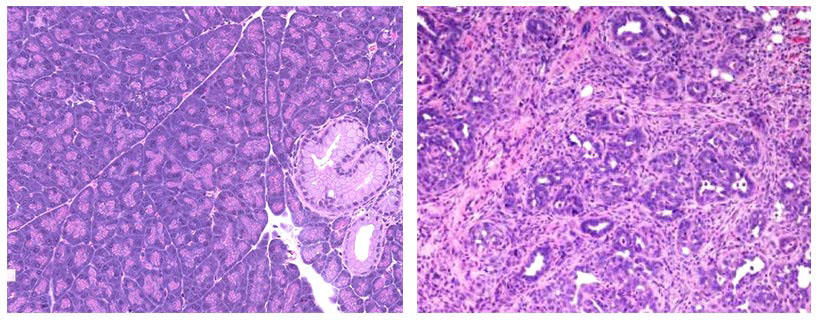
Microscopic pictures of pancreatic tissue in mice. The image on left shows tissue with precancerous lesions fed on a standard diet; the right shows the same tissue fed with a standard diet plus synthetic PPARδ added. Credit: Imad Shureiqi

