
Mayo Clinic experts are cautioning parents about the physical and mental consequences of the pandemic, and urging them to both vaccinate their children and keep an eye on their emotional wellbeing.

Dr. Nusheen Ameenuddin

Janice Schreier
Dr. Nusheen Ameenuddin, Mayo Clinic pediatrician, and Janice Schreier, a clinical therapist at Mayo Clinic Health System in La Crosse, spoke during a briefing on the toll the coronavirus has taken on youth in many facets. Though children are less likely to become infected with COVID or to experience severe illness, hospitalizations and deaths do occur among younger persons, and Ameenuddin stresses the importance of vaccination.
“The vaccines are incredibly effective in preventing very severe side effects,” says Ameenuddin, with potential consequences of infection including multisystem inflammatory syndrome. Of the coronavirus-associated cases, the vast majority were among the unvaccinated.
“Vaccination, even if a child still gets sick, makes them much less likely to be sick enough to be hospitalized or die, which, unfortunately, has been happening,” Ameenuddin says.
People are also reading…
Ameenuddin also warns of the long term consequences, with some individuals suffering from long COVID, the effects of which could last years. In addition, youth with loved ones who contract the virus may experience the devastation of losing a family member.
“I think one thing that we haven’t heard enough about is that over 140,000 children in the U.S. have lost at least one parent to COVID-19. Even if people are thinking this is something that is more of an adult disease and it’s not affecting children, many children have been orphaned,” says Ameenuddin.
“Not having a parent for the rest of your life is a really significant adverse event. That’s why it is very much a disease that’s affecting children in multiple different ways.”
Schreier notes that mental health challenges among youth have long been a concern, and the pandemic has exacerbated the issue. The number of individuals with anxiety, depression or disordered eating habits has “increased like nothing I’ve seen,” says Schreier.
Isolation from peers, lack of physical activity, altered sleep patterns and lack of routine have been stressors and triggers for some, and in 2021 there was an over 30% increase in patients seeking ER care due to mental health issues, Schreier says. “
“Those kids that are coming in are sicker than they used to be before the pandemic,: Schreier says. “They are having higher levels of suicidal ideation, showing more aggression with self-harm, higher rates of substance abuse and more instances of eating disorder.”
Parents who notice signs of mental distress among their children should consult with their child’s physician. Parents can also call 211 for information on local mental health treatment options, or text HOPELINE to 741741 for support.
COVID Vaccination Among Young Children , Stalls in the United States. NBC News reports pediatricians in the United States are alarmed at the slow pace in which young children are receiving a coronavirus vaccine. As the Omicron variant spreads like wildfire, the country has hit new highs of COVID-related pediatric hospitalizations. In the two months after Pfizer’s coronavirus vaccine received authorization to be administered to children aged 5 to 11, merely 27% have received at least one dose. Per the U.S. Centers for Disease Control and Prevention, just 18% of them have received two. Health officials say the vaccination rates among children have differed by region in the United States. Recent analysis shows almost 50% of 5- to 11-year-olds in Vermont are fully vaccinated. According to NBC News, less than 10% of 5- to 11-year-olds have received two doses in nine Southern states. You have these large swaths of vulnerable children who are going to school. , Dr. Samir Shah, director of the Cincinnati Children’s Hospital Medical Center, via NBC News. Experts say they fear states with lower vaccination rates “are less likely to require masking or distancing…”. One of the problems we’ve had is this perception that kids aren’t at risk for serious illness from this virus. , Dr. Yvonne Maldonado, chair of the American Academy of Pediatrics Committee on Infectious Diseases, via NBC News. That’s obviously not true. , Dr. Yvonne Maldonado, chair of the American Academy of Pediatrics Committee on Infectious Diseases, via NBC News
IN PHOTOS: Local community members wear face masks
Holmen, Wis.

Three Holmen best friends show of their masks.
Jim Falls, Wis.
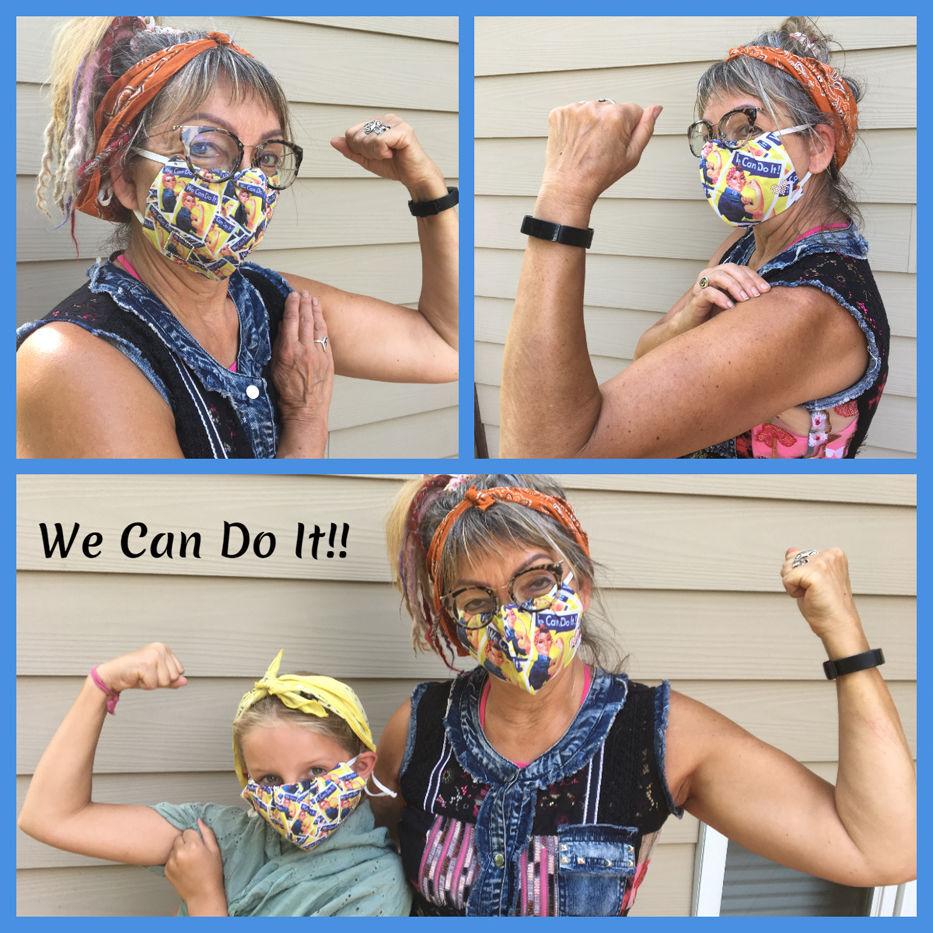
My granddaughter Johana and I – Getting through COVID-19 pandemic – “We can do it!”
La Crescent, MInn.
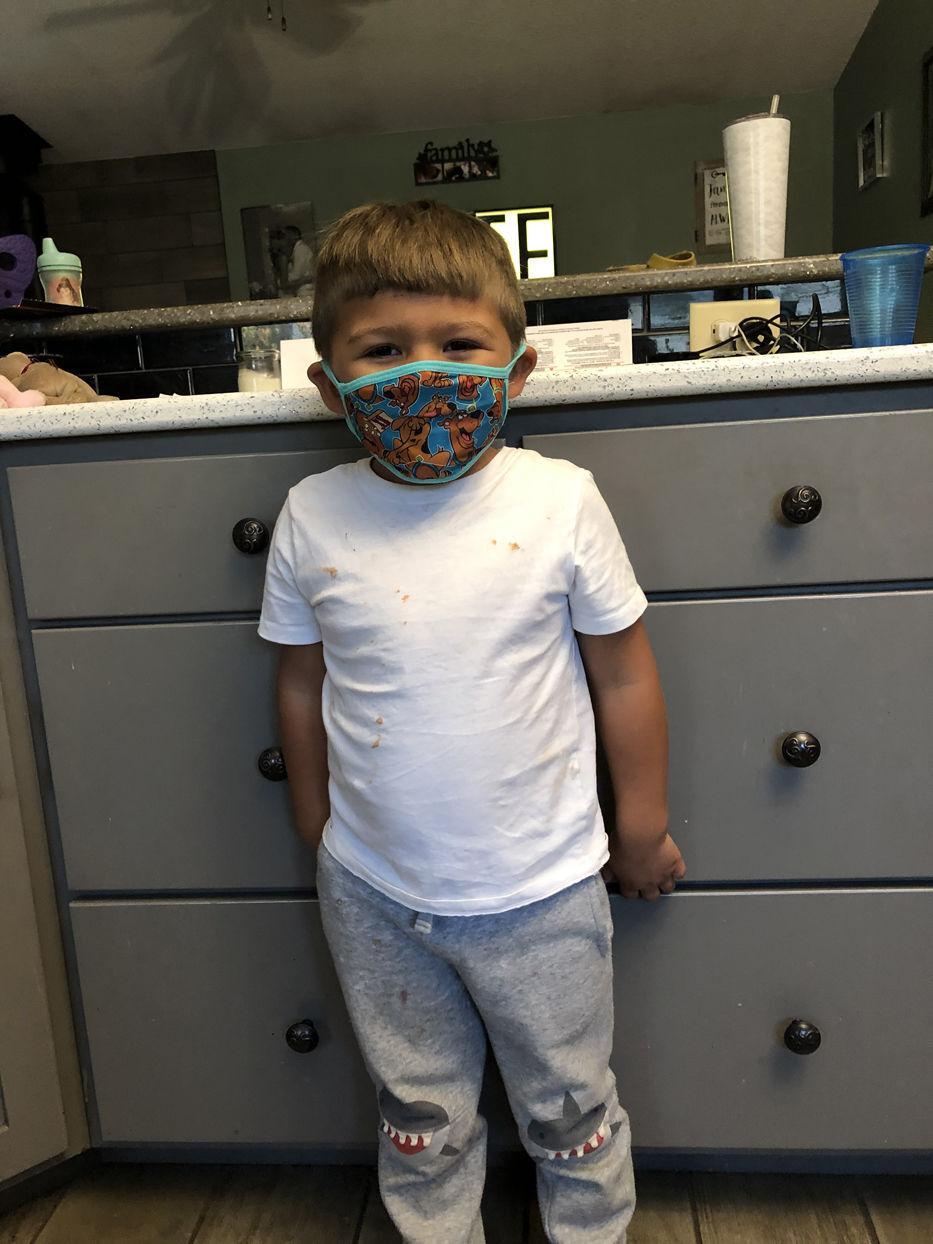
This is my 3 year old son Julian. I like to get my kids their favorite color and/or character to make it a little more fun to wear.
Working at the Tomah VA serving our Veterans during this pandemic!

In My Family We all Wear Our Masks Cindy And Baby V

mask made by fellow West Salem High School chemistry teacher

La Crosse punk

“My band had some masks printed to add to our merchandise line-up! Zammek – La Crosse Punk”
Lace for a lady

Caring for the community

A retired state social worker and her daughter who is a public school teacher say, “wearing masks when out and about is a simple and loving thing to do for your community.”
A mask with bling

Fancy that – a mask with bling!
Dinner guests

Having dinner guests together at home. Left to right, Don Smith, Mary Rohrer, and Nancy Korn Smith. We asked our readers to show off their masks for all to see. Use a form at https://go.lacrossetribune.com/Photos and send photos our way. We’ll put them in galleries that we will share on social media, and we’ll publish some of them in our papers.
A Friendly smile

“I intended this to my likeness and a friendly everyday mask. I was disappointed when i received it. Frankly, it’s ridiculous…so I’ll give readers a good laugh.”
October 6: GIrls WIAA Division 2 sectional golf

Aquinas’ Alexis Smith hits an approach shot at the WIAA Division 2 girls golf sectional at Drugan’s Castle Mound in Holmen.
October 2: Edgar vs Onalaska

The Onalaska dance team performs at halftime.
October 2: Edgar vs Onalaska

Masked spectators watch the game.
September 22: Aquinas vs Onalaska

JB Weiser makes a save for Aquinas.
September 17: Westby vs Aquinas

Aquinas’ Lauren Kelsey, left, and Victoria Nolte attempt a block on Westby’s Macy Stellner.
September 17: Westby vs Aquinas

Aquinas’ Victoria Nolte serves.
September 17: Westby vs Aquinas

The Westby tem celebrates a point won.
Holmen school lunches

Heather Mathwig, right, and Analise Smith with the Holmen School District Nutrition Department bag individual pizzas at Holmen Middle School.
Noodles & Company

Menche Evans cooks in the kitchen at the new Noodles & Company in Onalaska.
September 10: Dover-Eyota vs. La Crescent-Hokah

La Crescent-Hokah girls soccer head coach Jake Smith talks with player Olivia Meyer.
Onalaska Football

Onalaska head coach Tom Yashinsky runs football practice.
College during COVID

Western Technical College student Emery Thompson has his temperature taken by human resources department employee Jackie Kettner before entering the bookstore.
College during COVID

Face mask wearing students walk to and from classes on the first day of the fall semester on the UW-La Crosse campus.
Vice President Pence at Dairyland

Attendees give applause during the “A Stronger America Workforce” event at Dairyland Power Cooperative.
Vice President Pence at Dairyland

A woman in attendance for the “A Stronger America Workforce” event at Dairyland Power Cooperative with Vice President Mike Pence wears a patriotic facemask.
Scooping up smiles

Marty Diersen with the Sweet Shop hands a cone to Joy Benson, a member of Logan High School’s class of 1969, dressed as the children’s book character Raggedy Ann.
Emily Pyrek can be reached at emily.pyrek@lee.net.

